Wine Storage Service · Mandarin · San Jose
Sub-Zero Wine Cooler Repair in Mandarin
A wine cooler never announces its failure — it just lets the bottles warm while the compressor hums along. We keep Sub-Zero® wine storage honest in kitchens, pantries, and garages around Mandarin.
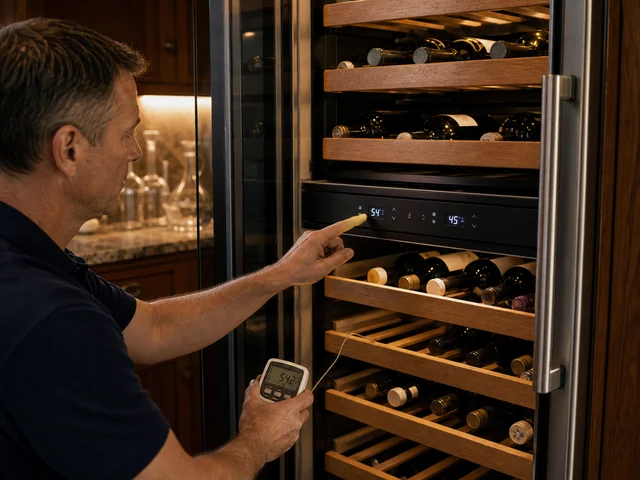
A Sub-Zero wine cooler in Mandarin usually fails quietly: a drifting thermistor lets one zone wander off its set point, or Florida humidity ices the evaporator and pools condensate under the door. We test both zones against a reference thermometer, fix the actual cause, and most wine storage repairs run $250 to $1,100.
For Sub-Zero repair in Mandarin and along the Scott Mill riverfront, call Mandarin Sub-Zero Repair at (904) 892-7163 or book online .
Service notes current as of June 13, 2026
Which Sub-Zero wine units do we service?
Wine storage questions across Mandarin and San Jose — 32223 and 32257 — come to Mandarin Sub-Zero Repair by phone at (904) 892-7163 or through the online booking page, and the answer to "can you work on mine" is almost always yes. The generations we meet most often:
- 400 series — 424, 424FSG, 427, and 430 models built 1999–2016; the workhorses of older Mandarin remodels
- WS-30 — 2009–2016, often tucked into butler pantries
- IW-18, IW-24, and IW-30 — the 2015–2021 integrated line behind cabinet panels
- BW-30 and UW-24 — 2016–2021 built-in and undercounter units, common in wet bars
- 315W — the compact 2005–2015 unit that shows up in kitchen islands
Fair warning, neighbor to neighbor: the current wine units sold since late 2022 — CL3050W and the DEU undercounters — are still inside Sub-Zero's factory warranty. Start with Factory Certified Service for those; we will be glad to help once the coverage runs its course.
Why do wine coolers fail so quietly?
Unlike a refrigerator, a wine unit has no melting ice cream to tattle on it. The three failures we see most are silent by nature. Thermistor drift skews what the control board believes about each zone, so the display reads 55 while the bottles sit at 62. Evaporator icing builds when humid air sneaks past a relaxed door seal, smothering the coil until cooling fades — and then melts into the condensate puddles owners actually notice. And door seal and UV wear lets in both heat and light, the two things the cabinet exists to keep out.
The only loud symptom is a compressor that starts droning or clicking late in life — our field guide to Sub-Zero noises sorts the harmless hums from the urgent ones.
Matching the symptom to the fix
| What the cooler shows | What we test first | Typical ticket |
|---|---|---|
| One zone warm, display insists it is fine | Zone thermistor against a reference thermometer | $250–$550 |
| Both zones drifting warm together | Condenser airflow, then evaporator for icing | $250–$550 |
| Condensation on the glass or pooling below | Door seal fit and the condensate drain path | $550–$1,100 |
| Unit dead after a summer storm | Power path and control board for surge damage | $550–$1,100 |
| Runs nonstop, never reaches set point | Refrigerant pressure once airflow is ruled out | $1,500–$3,000 if sealed system |
Garages, butler pantries, and river humidity
Where a wine unit lives in Mandarin decides how hard its life is. The kitchens and butler pantries of the bigger houses off San Jose Boulevard are easy duty. The garage units are not: a Florida garage in August is a sauna, and a cooler rated for a 75-degree room runs flat-out against it while humid air condenses on every cold surface inside.
The riverfront crowd adds its own pattern. Households that entertain on their docks along Scott Mill Road and out toward Mandarin Point often keep a second wine unit or an undercounter pair near the porch, where river air keeps door seals soft and condensate trays busy. We cover those visits — gate codes, dock paths, and all — in our Beauclerc and Scott Mill house-call notes. A pre-summer checkup catches most of it: seal inspection, coil cleaning, and a zone calibration take under an hour and spare the collection a hot July. The same humidity logic applies to garage freezers, by the way — there is more on that in our freezer service rundown.
Wondering what a visit costs or how scheduling works around school pickup? The plain-spoken FAQ page covers both, and the written-quote rule applies to wine units same as everything else: diagnosis first, your approval before parts.
What a wine cooler diagnosis includes
Because wine units fail so quietly, the visit is as much measurement as repair. Here is the order we work one, so a drifting sensor never gets mistaken for a dying compressor.
- We read both zones with a calibrated probe and compare against what the display claims — drift between the two is the most common finding.
- The condenser coil gets inspected and cleaned; in a humid Mandarin garage or pantry it loads up faster than the spec sheet expects.
- The evaporator gets checked for icing, the classic sign that humid air is sneaking past a relaxed door seal.
- The door gasket gets a fit test and the UV-tinted glass and seal get a look, since both heat and light are what the cabinet exists to block.
- The condensate drain path gets cleared and verified so meltwater leaves instead of pooling under the door.
- You get a written quote before any part goes in, and we let the cabinet settle to its set points before calling it done.
Wine cooler parts and what each runs
A handful of components account for nearly every wine storage repair we make around Mandarin. Matching your symptom to the part helps a quote make sense.
| Component | Symptom it causes | Typical range |
|---|---|---|
| Zone thermistor | One zone wanders off its set point while the display reads fine | $250–$550 |
| Evaporator fan motor | Both zones drift warm; airflow drops; faint drone | $250–$550 |
| Door gasket / seal | Condensation, icing, and a compressor that runs long | $550–$1,100 |
| Condensate drain clearing | Water pooling under the door between cycles | $250–$550 |
| Control board (surge damage) | Unit dead or unresponsive after a summer storm | $550–$1,100 |
| Sealed-system repair | Runs nonstop, never reaches set point, partial coil frost | $1,500–$3,000 |
Only the last row reaches sealed-system money, and on a wine unit it is rare — most calls close in the first three rows the same afternoon.
Is an older 400-series wine unit worth repairing?
Almost always, around here. The 400 series — 424, 424FSG, 427, and 430 — ran from 1999 to 2016, and plenty of those cabinets are still holding perfect cellar temperature in Mandarin remodels two decades on. Thermistors, fan motors, gaskets, and condensate parts remain available, and the cabinet is built to outlast several generations of the parts inside it. A thermistor or fan repair at $250 to $550 against a new built-in wine unit plus the cabinetry work to fit it is not a close call.
The honest exception is a sealed-system failure stacked on other aging parts; when the math stops favoring repair we show you the numbers rather than steer you. And if a specific component has gone scarce for your model, we say so before any work starts. For a unit bought since late 2022 — a CL3050W or a DEU undercounter — start with Factory Certified Service while the warranty holds, then call us when it runs out.
Wine storage questions we get asked
My wine cooler runs but the upper zone will not hold 55 degrees — why?
Dual-zone Sub-Zero wine units rely on a thermistor in each zone, and those sensors drift with age. A zone that reads correct on the display while a bottle thermometer says otherwise is the classic sign. The sensor itself is an affordable part; the value is in catching the drift before months of warm storage do quiet damage to the wine.
Is the garage a bad spot for a Sub-Zero wine cooler in Florida?
It is the hardest duty we ask of one. Summer garages around Mandarin sit above 90 degrees with the humidity of a greenhouse, so the unit runs nearly nonstop, the evaporator ices, and condensate outruns the drip system. Garage units can work here — they just need a coil cleaning before each summer and a door seal that is honestly tight, not approximately tight.
Do you still repair the older 424 and 427 wine units?
Gladly. The 400 series ran from 1999 to 2016 and plenty of them around this neighborhood are still holding perfect cellar temperature. Thermistors, fan motors, door gaskets, and condensate parts remain available, and the cabinets are built to outlast several of the parts inside them. If a specific component has gone scarce for your model, we say so before any work starts.
Why is water pooling under the wine cooler door?
Humid air is condensing somewhere it should not. Usually the door seal has relaxed enough to let moist air in, the evaporator ices over, and each off-cycle melts more water than the condensate system can carry away. Occasionally the drain path itself is blocked. Either way the puddle is a symptom — drying the floor without fixing the seal or drain just schedules the next one.
What temperature should each zone of a Sub-Zero wine cooler actually hold?
A dual-zone unit is built to keep an upper zone near 55°F for serving reds and a lower zone closer to 45°F for whites and sparkling, though both are adjustable within a roughly 40-to-65°F range. The cellar target most collectors hold is 55°F with stable humidity. The real risk to wine is not a few degrees off but swings — a thermistor drifting in and out of spec lets the temperature wander, and that is what we catch against a reference thermometer.
Can vibration from the compressor actually hurt the wine?
Over years, yes — constant vibration disturbs sediment and is thought to age wine unevenly, which is part of why Sub-Zero isolates the compressor on these units. A wine cooler that has started transmitting a noticeable buzz into the rack usually has a worn fan bearing or a mount that has loosened with age, not a healthy compressor. We re-isolate or replace the offending part before it rattles a whole collection.
Should I keep the wine cooler running when the bottles are out for a party?
Leave it on. Cycling a wine unit off and on stresses the compressor far more than steady running, and an empty cabinet recovers temperature quickly once bottles return. The bigger entertaining-season worry on the river is the second unit by the dock or porch, where humid air keeps the door seal soft — a pre-summer seal and coil check spares the collection a warm August.
Let's get your Sub-Zero back to quiet shelves, cold milk, and clear ice.
Weekdays 8 a.m.–6 p.m. · Saturday 8 a.m.–noon